


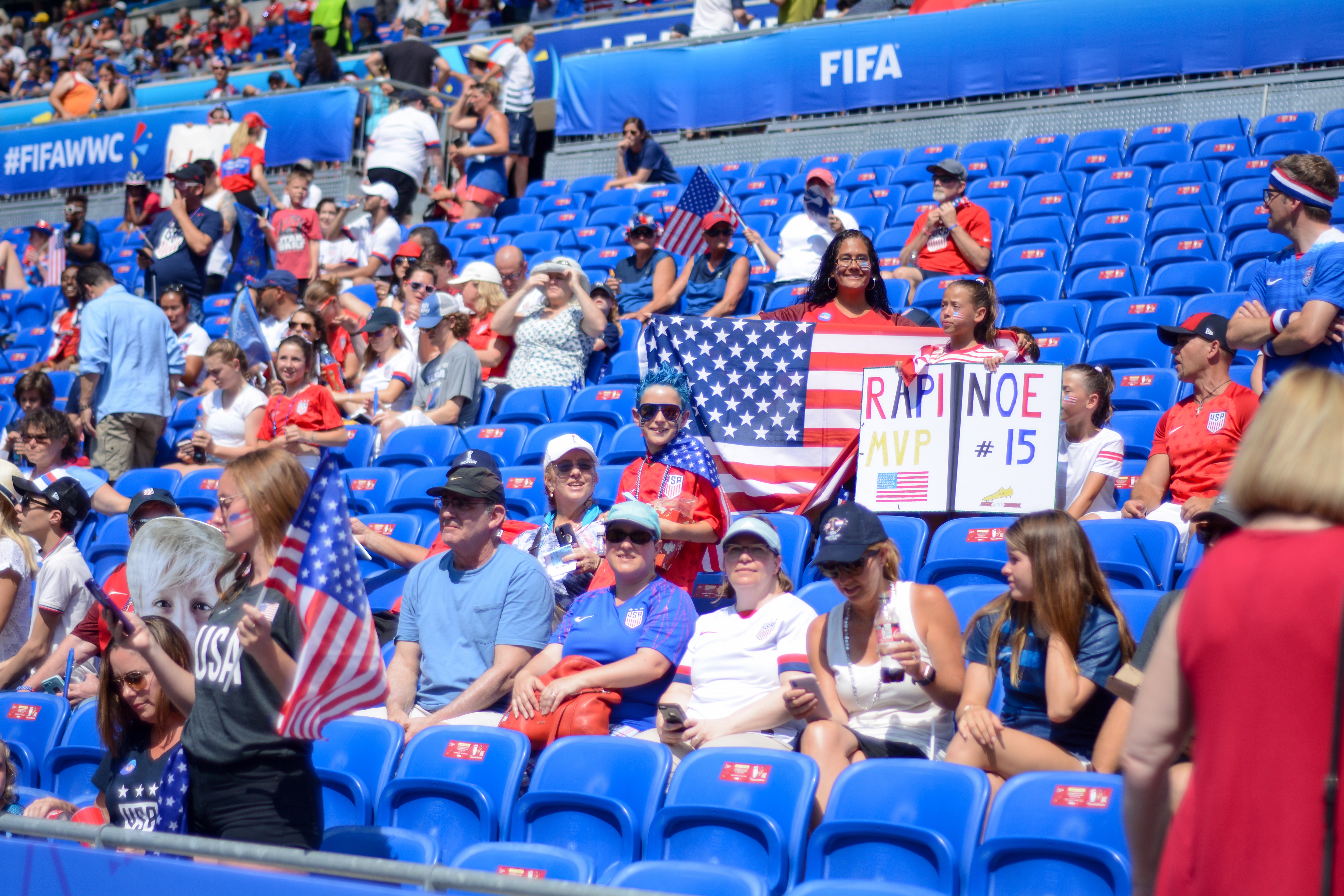
Heat is the #1 weather-related hazard in the U.S. — and it doesn't need a record heat wave to wear you down. The games you're most likely to attend this year are forecast for what scientists call high heat stress — the kind of hot where even acclimated bodies start to struggle to stay cool.

HeatSense for FANS
Know where you stand
HeatSense pairs a fitness tracker and the HeatSense app to see how your body is responding to the heat — live, from your seat. Stay in the stands. Cheer your team.
Big games. Big heat. Not enough shade.
- 1. NCAA — average college football game length is ~3 hrs 22 min; NFL ~3 hrs 12 min; FIFA matches run ~2 hrs. Add tailgate, parking, walks, and pre-game milling: typical fan outdoor exposure runs 5–7 hours.
- 2. Int'l Journal of Biometeorology (2025) — Heat stress conditions during the 2026 FIFA World Cup. Researchers concluded that 14 of 16 host locations are forecast to reach high heat stress conditions on summer afternoons.
- 3. CDC, Heat-Related Illness Data — heat-related emergency department visits in the U.S. avg more than 67,000 per year.
HeatSense for fans
Stay ahead of the heat
HeatSense reads your personal data and gives you a heads-up before heat catches up. Hydrate, find shade, cool down — and make it to the fourth quarter.
You're probably not acclimated.
Acclimation isn't toughness, and it isn't about how long you've lived somewhere warm. It's a specific adaptation your body builds from exercising outdoors in the heat, almost every day, for one to two weeks1. Most fans never get there. Here's the quick check:
If any of these are you, you're walking into a hot stadium with a body that hasn't practiced for it. That's not weakness — it's just biology. And it's one of the biggest reasons fans get caught off guard by the heat.
- 1. CDC / NIOSH, Heat Stress: Acclimatization. Adjusting to Work in the Heat: Why Acclimatization Matters
- 2. CDC, Heat & Older Adults (Aged 65+) — older adults have reduced thermoregulatory capacity (sweat response, cardiovascular adjustment to heat). Risk begins to elevate above age 50.
Built for fans, by the team behind the pros. HeatSense is the heat response tech college teams trust on the field. Now in your pocket.
Heat is a personal thing.
Two fans in the same row, the same sun, the same beer count — and one of them is dragging by halftime while the other is fine. Age, body composition, hydration, sleep, fitness — they all change how your body handles heat1. The weather app can't see any of that. HeatSense Athlete can — so you can stay ahead of it.
Fan A
Fan B
- 1. CDC, Heat-Related Illness: Risk Factors — individual susceptibility to heat varies with age, fitness, hydration status, sleep, body composition, and certain medications. American College of Sports Medicine, Position Stand on Exertional Heat Illness During Training and Competition.